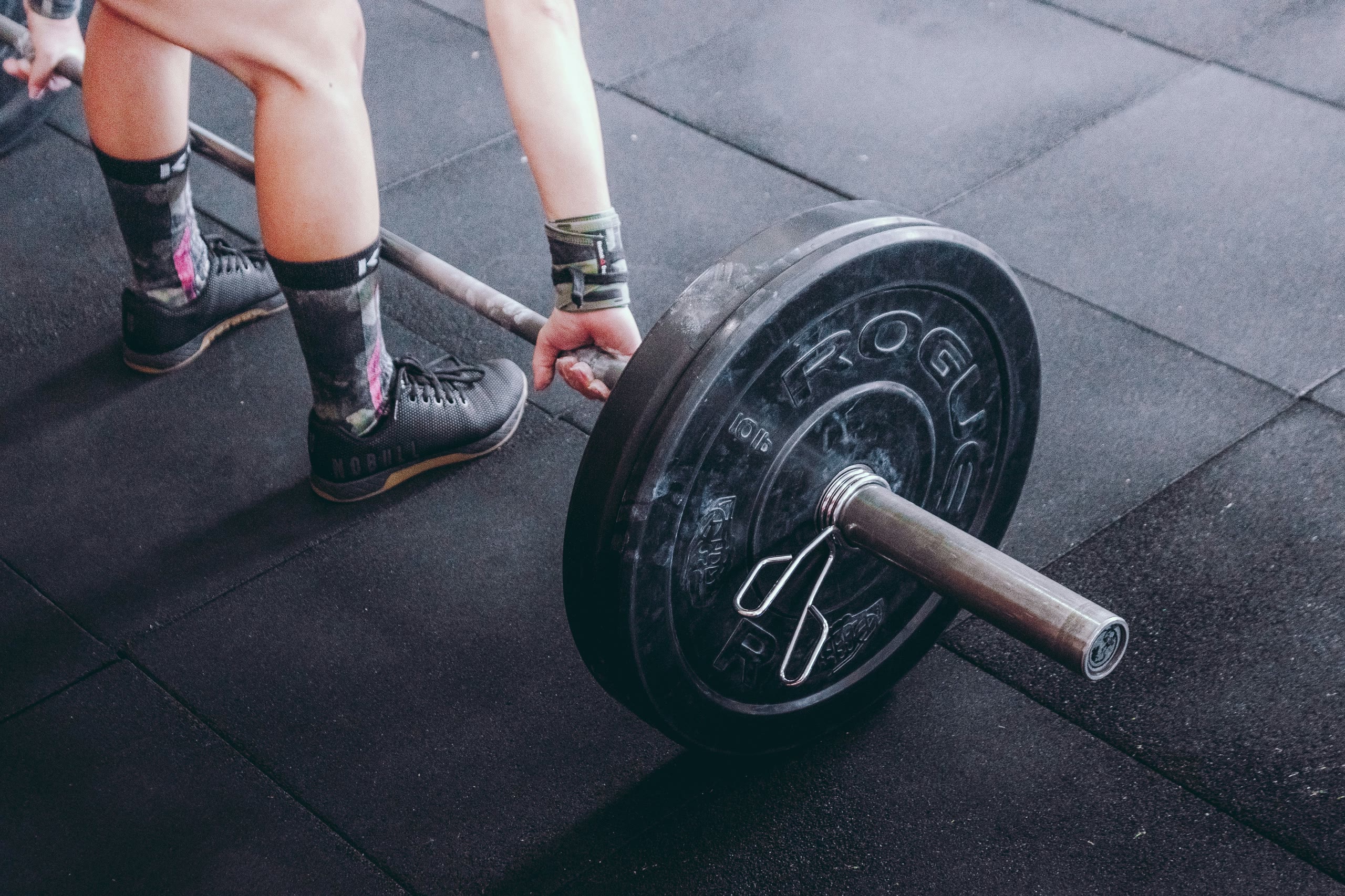
Six months ago I started the Snatch – a technically demanding but incredibly satisfying movement in Olympic weightlifting. Today I can stabilise 40 kg safely overhead. That was not a straight path: there were Mistakes, frustration, mini-breakthroughs – and a great many repetitions with light weights.
In this article I share my path from a coach’s and an athlete’s perspective: What helped me, which drills I recommend, which mistakes I made and how I structure my training so that technique and strength grow together.
Why the snatch of all things?
- It forces you into clear technique: Timing, position, tension – everything counts.
- It demands Mobility (ankle, hip, thoracic spine, shoulder) – and rewards consistent work on it.
- It trains Explosiveness & body tension – skills that also help noticeably in Pilates and functional training.
- It gives you an an incomparable feeling, when the bar “floats” and you stable in the overhead squat land.
The biggest struggles (and how I solved them)
-
Pulling too early (early pull) I “pulled” the bar up too early with my arms instead of using the extension (knee–hip–ankle) to the full. → Solution: “Patience to the hip”, high-pulls with a pause, tall snatch.
-
Bar path too far in front of the body The bar drifted away – unstable, energy-wasting. → Solution: “Bar against the shirt” – lat-pulldown feel; snatch pulls with contact and video feedback.
-
Unstable position at the bottom (overhead squat) Shoulder blades, trunk and leg work not in sync. → Solution: Overhead‑Squats with a tempo eccentric, Snatch Balance, press in snatch.
-
Thoracic/shoulder mobility At the beginning the overhead position limited me. → Solution: daily Thoracic extension (foam roller), Pec/lat mobilisation, “wall slides” – 8–10 min.
6 months in stages – how I structured it
-
Months 1–2: Technique base Position work, bar path, plenty of empty bar / 5–15 kg, slow pulls, tall snatch, overhead squat.
-
Months 3–4: Transfers + strength Snatch pulls, hang snatch (power & full), Front/back squat, RDLs, shrugs. Video feedback 2–3×/week.
-
Months 5–6: Timing & trust Complexes with contact at the hip, Snatch Balance, “no hook/no feet” variations, single @ RIR 1–2.
Principle: 70–80% of the sessions Technique volume in the light to moderate range. PR attempts rare, but targeted.
Drills that really helped me
- Tall Snatch (start on tiptoes, without a pull) → timing into the drop under the bar
- Hang snatch (knee/hip) → Feel the bar contact, prioritise hip extension
- Snatch pulls with a pause at the knees → Secure position & back angle
- Snatch Balance / Heaving Snatch Balance → Trust in the depth & “punch”
- Overhead‑Squat with a 3–4 s eccentric → stability, breathing, footwork
Mobility & prep (10 minutes, every training day)
- Thoracic extension on the foam roller (2× 45–60 s)
- Lat/pec mobilisation with a ball or band (1–2 min/side each)
- Ankle Dorsiflexion (knee-over-toe, 2×10 slowly)
- Scapular Prep (band pull-apart, face pulls, 2×12–15)
My numbers & progression
- Start: Empty bar (15–20 kg), many hang variations
- 3 months: 30 kg technically solid
- 5 months: 35 kg (a stable overhead squat)
- 6 months: 40 kg PR – controlled, no “saved lift”, felt 8/10 Effort
Important: No ego lifting. Every poor repetition “teaches” the nervous system the wrong thing. Better clean triples @ light/moderate than a crooked max.
My 5 biggest lessons
- Patience to the hip – Timing beats raw strength.
- Bar close! – The bar “brushes” the shirt, not the air.
- Breath & core – an exhaling “brace” in the bottom, ribs “down”.
- Tempo variations (slow on the way down, stable at the bottom) build real control.
- Video feedback 10–15 sec after the set is worth gold.
A sample block (2 weeks)
- Mon: Hang Snatch (knee) 6×2 @ 55–65% | Overhead‑Squat 4×3 | Pulls 3×3
- Wed: Tall Snatch technique 6×2 | Snatch Balance 5×2 | RDL 3×6
- Fri: Full snatch singles up to RPE 7–8 (clean!), then back squat 3×5
Optional short EMOM technique (8–10 min) only with technique weight.
Who is this for?
- You want Technique, timing, body awareness – not only “heavy”.
- If you would like stable overhead work and build mobility.
- You love it when details make the difference – step by step.
Safety first
- Thumb grip (hook grip) learn correctly.
- Drop zone clear, Clips on the plates.
- No maxes on “wobbly days”.
- Spot coaching use: an outside eye saves months.
My conclusion
The snatch is like a puzzle – at first the pieces seem illogical. With patience, good technique and small progressions they suddenly lock together. The first clean lift at 40 kg feels like light magic – and makes you want more.
If you want to learn this – technical, joint-friendly and without ego stress – come by:
- Classes & dates: Functional training
- 1:1 technique coaching: Personal Training
- More stories & tips: Blog
See you soon on the platform – Viktoria